

Unlock Growth & Efficiency with a Winning IT Business Strategy

Getting your IT business strategy right is a fundamental step to staying ahead, yet only 27% of business leaders say their technology is fully aligned with their business goals.
This means most small and medium-sized businesses are missing out on opportunities for growth and efficiency. The good news is that aligning your technology doesn’t require a massive overhaul, just clear priorities and a practical roadmap.
| Bryan Fuller, CEO at Contigo, notes, “A strong IT business strategy bridges the gap between what you need today and where you want your business to be tomorrow.“ |
What Is an IT Strategy and Why Does It Matter?
Think of an IT strategy as your business’s blueprint for using technology in a way that actually moves the needle. It’s not just about buying the latest software or hardware, it’s about making sure every tech decision is purpose-driven and closely tied to your business objectives.
As more than 89% of companies have adopted or plan to adopt a digital-first business strategy, having a clear IT strategy is no longer optional. Without one, it’s easy to end up with costly tools that don’t solve your real problems or to miss opportunities for automation and growth.
A sound IT strategy gives you focus, helps prioritize investments, and ensures your technology truly supports your team and your customers.
Take Control of Your IT StrategyStop letting technology hold your business back. Discover how a focused IT plan can boost your growth. |
Why a Strong IT Strategy Drives Your Long-Term Business Success
Your IT decisions today don’t just impact operations—they shape the future of your business. Here’s why investing in a clear, forward-looking IT strategy matters:
- Enhance Business Continuity: Backups and recovery plans are a foundation of a good IT strategy; it creates minimal downtime. This means your team has access to the tools and data they need, keeping operations smooth and customers happy.
- Boost Security Assurance: Cyber threats never take a break. A proactive IT strategy involves robust cybersecurity measures that protects your data, reputation, and bottom line.
- Enable Growth Enablement: The right technology foundation supports scaling operations, entering new markets, or handling seasonal spikes without missing a beat.
- Gain Operational Efficiencies: Streamlined workflows and smart automation free up your team to focus on growth instead of repetitive tasks.
- Strategic Decision-Making: When real-time insights from your IT systems are baked into your IT solutions, it helps leaders make informed, high-impact decisions.
- Manage Cost Control: The right IT strategy avoids wasteful spending by prioritizing technology investments that truly move your business forward.
- Future-Proofing: A forward-looking IT approach keeps you ahead of industry trends, ready for new technologies, and prepared for whatever comes next. With 65% of organizations planning to merge their edge and cloud environments in the next 12 months, staying proactive ensures you’re ahead of these industry shifts.
Bottom line: Companies that align their strategic planning processes with their overall goals are 2.5 times more likely to outperform their peers. Investing in IT today is investing in growth, security, and long-term success.
IT Strategy Metrics to Track Business Impact
| Metric | Why It Matters | Target/Goal |
|---|---|---|
| System Uptime | Measures reliability of IT operations | >99.9% uptime |
| Security Incidents | Measures effectiveness of cybersecurity | Minimize breaches and downtime |
| Workflow Efficiency | Tracks productivity gains from automation | Increased task completion speed and accuracy |
| Cost per Project | Tracks IT investment efficiency | Optimize spend and maximize ROI |
| Time to Scale | Measures readiness for business growth | Quick adaptation to new markets or spikes |
Take a Methodical Approach to Building an IT Strategy for Business Success
A methodical approach is essential if you want your technology to drive, not drag, your business forward. Here’s how to build an effective IT strategy:
- Assess Your Current State: Take stock of your existing systems, processes, and pain points. Don’t overlook IT security—identify vulnerabilities and gaps in automation, cloud adoption, and overall system efficiency.
- Define Clear Objectives: Set measurable goals tied directly to business outcomes, such as improving customer experience or reducing costs.
- Engage Expert Guidance: According to CloudSecureTech, an IT management consultant can bridge the gap between business goals and technology capabilities, offering strategic insight that goes beyond simple troubleshooting. Experienced consultants provide field-tested guidance to help your IT strategy align with your business objectives and drive measurable results.
- Prioritize Initiatives: Focus on projects that deliver the highest impact, like cloud migration, automation adoption, or strategic technology upgrades that enhance productivity.
- Develop a Roadmap: Lay out a timeline, assign responsibilities, and set milestones to keep your team accountable.
- Foster Collaboration: Build strong partnerships between your internal IT team and external support providers to ensure smooth operations and seamless execution.
| Pro tip: Think about where a focused business IT strategy can immediately unlock value for you-cybersecurity, automation, customer experience, or data-driven insights. |
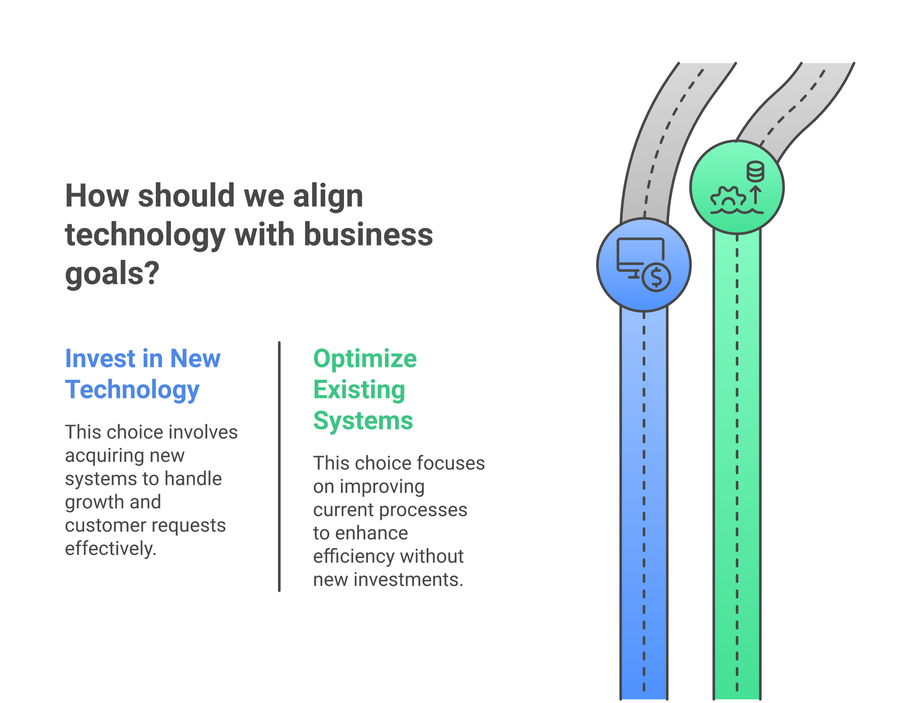
Tips to Measure and Sustain IT Strategy Success
Building your IT strategy is only the first step. To make it last, focus on measuring progress and maintaining momentum. Here’s how to keep your strategy working for your business:
Define Key Metrics: Identify what success looks like—whether that’s improved system uptime, faster project delivery, reduced support requests, or stronger customer satisfaction.
Track ROI: Evaluate how each technology investment supports business performance. Compare pre- and post-implementation data to see where your IT initiatives are driving real value.
Gather Feedback: Collect insights from users and team leaders to uncover what’s working and what needs refinement. Firsthand input often highlights issues data alone can miss.
Review Regularly: Schedule quarterly or semiannual strategy reviews. Use them to analyze performance, reassess priorities, and align your IT direction with evolving business goals.
Celebrate Progress: Recognize and communicate the wins—big or small. Celebrating measurable outcomes helps sustain engagement and reinforces the value of a well-executed IT strategy.
| Pro tip: Success isn’t just about implementation. It’s about consistency. Keep measuring, refining, and realigning your IT strategy to stay ahead of change. |

| More articles you might like: |
Transforming IT Strategy into Tangible Results
Putting your IT strategy to work is where real transformation begins. When your team understands that the technology plan is a living guide, not just another document, you’ll notice smoother operations and fewer surprises. For example, one local manufacturer we worked with reduced their onboarding time from weeks to days once their IT was properly aligned with business goals, freeing up resources to focus on growth.
At Contigo, we know that fast, reliable support isn’t a luxury, it’s a necessity. As Austin’s leading independently owned MSP, we back you with the region’s fastest chat ticket response, unwavering SOC2 compliance, and all-inclusive solutions tailored for Office 365 and cloud innovation.
If you want a partner who never says “no” and always delivers, reach out today. Let’s build a future that’s ready for anything.
| Discover Trusted Managed IT Services Near You
|